

Rick and I have shared a bed for thirty-one years, and for the last three we have been sleeping in two different climates. He goes to bed in socks and pulls the comforter up to his chin. I lie there with the sheet pushed down to my waist, waiting for the flash to pass. Then at 2:40 in the morning I wake up with damp hair and a warm pillowcase and go stand in front of the fan for a while. Neither of us is being difficult. We just run at different temperatures, and a bed only has one.
I bought a lot of bedding trying to fix that. A cotton blanket that was too warm. A sheet set that felt cool for ten minutes. A gel pillow I still cannot explain. Some of it helped a little. Most of it just moved the problem around. What finally worked was a sequence rather than a purchase. The Bedsure cooling blanket is part of that sequence now, and I will get to it, but the blanket on its own would not have fixed our bed. If you only change one thing, change the order you do them in.
The layer that ended the blanket tug-of-war on my side of the bed
I keep it on my half, over the sheet, and Rick keeps his comforter folded on his. Nobody drags anything across the middle anymore.
Amazon Check Today's Price on Amazon →Five Steps, in the Order That Mattered
Step 1: Split the Top Layers, Not the Bed
The first thing I got wrong was trying to find one blanket that suited both of us. There is no such blanket. Rick wants weight and warmth all the way to his chin. I want almost nothing on me, and I want it to feel cool when I turn over at two in the morning. Those are opposite requests, and no single bed covering is going to satisfy them.
What worked was giving each side its own top layer. Rick keeps his comforter folded double on his half. My half gets a lightweight cooling blanket laid right over the sheet. On a queen you have roughly thirty inches per person, so each layer has to be narrow enough that it does not get dragged into the middle.
I measured the bed one Saturday afternoon with a tape measure from the kitchen drawer, which sounds excessive until you have spent a month fighting a blanket in the dark. A queen is 60 inches wide and 80 inches long. Rick's comforter folded double came out to about 34 inches across his half. That left me about 26 inches of usable width on my side, and the first twin-size cotton blanket I tried was 66 by 90, which sounds generous until the extra fabric slid off the edge of the mattress at three in the morning and took the whole layer with it. The Bedsure blanket is 90 by 90 inches, wider than the mattress, so the overhang on my side reaches far enough down to tuck underneath rather than lie on top.
The tucked edge mattered more than I expected. When my blanket is anchored, turning over does not pull it off Rick and does not drag his comforter onto me. For the first time in years we stopped waking each other up, and that was half the problem right there.
Step 2: Put the Cooling Where the Heat Actually Starts
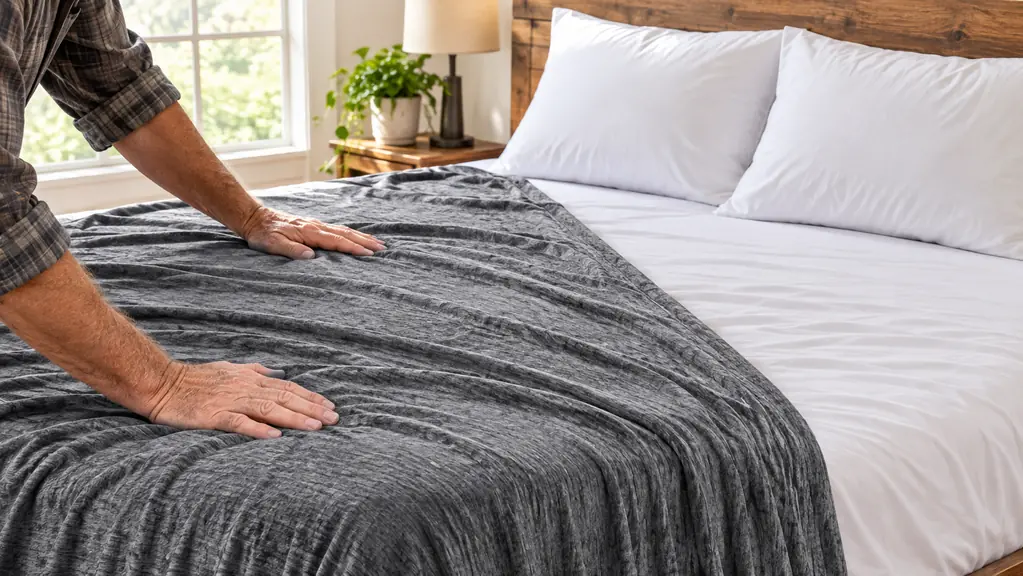
Heat does not come off a body evenly. Mine starts across the chest and the back of the neck, and that is where a blanket actually has to do its work. So the cooling layer goes directly on top of the sheet. Not over another blanket, not folded double. The fabric that touches your skin is the fabric that moves the heat.
Before the blanket, I tried two other things. A gel mat that was genuinely cold for about twenty minutes and then felt like lying on a damp sponge for the rest of the night. And a cooling pillowcase I still use in August but which did nothing for the back of my neck once the sweat started. Both were attempts to cool one small square of a large problem. What I actually needed was something that sat over my whole upper body without adding weight, and neither of those did that.
The Bedsure blanket is 3.9 pounds and it is thin. That is the entire point. It lies on me instead of pressing down on me, so I do not get that trapped, heavy feeling that makes me go hunting for a foot to stick out the side. The listing describes a Q-Max rating above 0.4 and says the surface feels about 4 degrees cooler on contact. I cannot measure that number in my bedroom, but I can tell you the first thirty seconds of lying down under it are noticeably different from cotton.
One honest caveat. It is a light layer, not a climate control system. On a night when the upstairs is still eighty degrees at bedtime, it feels cool for a while and then it feels like a blanket. Which is why the next step exists.
Step 3: Cool the Room, Not Just the Bed
I bought a lot of bedding before I admitted the room was the real problem. Our bedroom is upstairs in a 1960s brick two-story and it holds heat like a brick oven holds a fire. A blanket can move heat away from your skin. It cannot cool a room that is still holding yesterday afternoon.
Two summers ago I tried to solve it with bedding alone. It was the middle of July, the upstairs was still holding heat from a ninety-four degree afternoon at ten at night, and I went through three different top layers in one night before giving up and going downstairs to the couch at four in the morning. The couch was cooler, which told me everything I needed to know. It was never the blanket. It was the room. We now put the window unit in during the first week of May, before the first warm night rather than after the first bad one, and I have stopped arguing with the thermostat about it.
The ceiling fan runs on low all night. Moving air does more for me than cold sheets ever did, and it does it without making Rick cold, because the air moves over the bed instead of sitting on it. He has never once asked me to turn it off.
This is the least interesting step and it made the biggest difference. Get the room down to something you can stand, then let the bedding handle the last few degrees. Doing it the other way around is how you end up with a closet full of blankets that did not work.
It weighs 3.9 pounds and it lies right on the sheet. That is the whole trick: the heat comes off my back before it ever has a chance to reach Rick's side.
Step 4: Dress for the Bed, Not for the House
I sleep in a loose cotton t-shirt and shorts. Rick sleeps in a t-shirt, flannel pants, and socks. Written down it sounds ridiculous. In practice it works perfectly. Dress for the bed you are getting into, not for the house you walk around in all evening.
Two smaller things helped. I keep a spare pillowcase folded in the nightstand and change it in the dark when I wake up damp, because a warm pillowcase keeps me awake longer than the sweat does. And I stopped using fabric softener on the sheets. It leaves a film that makes cotton feel warmer and flatter to me, and I noticed the difference the first week I quit. The first night I slept on a washed-once, no-softener percale sheet I woke up less clammy, and that was in October, not even a warm month.
Step 5: Build a Reset Routine for the 3 A.M. Wake-Up
I still wake up some nights. Fewer than I used to, but some. The difference now is that I have a routine instead of a struggle. When a flash comes, I get up. I do not lie there throwing the blanket off and pulling it back on, which only makes me hotter and, frankly, more annoyed.
I stand at the open window or in front of the fan for two minutes with a glass of water. I actually time it now, because two minutes feels like twenty when you are annoyed and awake at three in the morning, and I used to stand there long past the point where I was cool again, working myself up instead of settling down. Then I flip the pillow and turn the Bedsure blanket over so the damp patch is not against my skin, and I get back in.
Most nights I am asleep again inside twenty minutes. Before, I would lie awake for an hour and a half doing arithmetic about how much sleep I was losing, which is its own kind of torture and never once helped me fall asleep.
The blanket being machine washable in a laundry bag matters more here than I expected when I first got it. Night sweats mean the bedding gets washed far more often than it used to, and something I can throw in with the regular load and not fuss over is worth keeping around. Mine goes through weekly from May to September. It comes out of the dryer soft and it has not pilled or gone stiff in two seasons of that.
What Else Helps
Percale sheets instead of sateen. Percale is the crisp, plain weave and it feels cool and a little papery, which is what I want at two in the morning. Sateen has a sheen and a heavier hand and I always end up kicking it off. I bought a plain white percale set on sale in a department store two years ago and I have not gone back. This is a preference, not a rule, but if you have only ever slept on sateen, try one percale set before you buy another gadget.
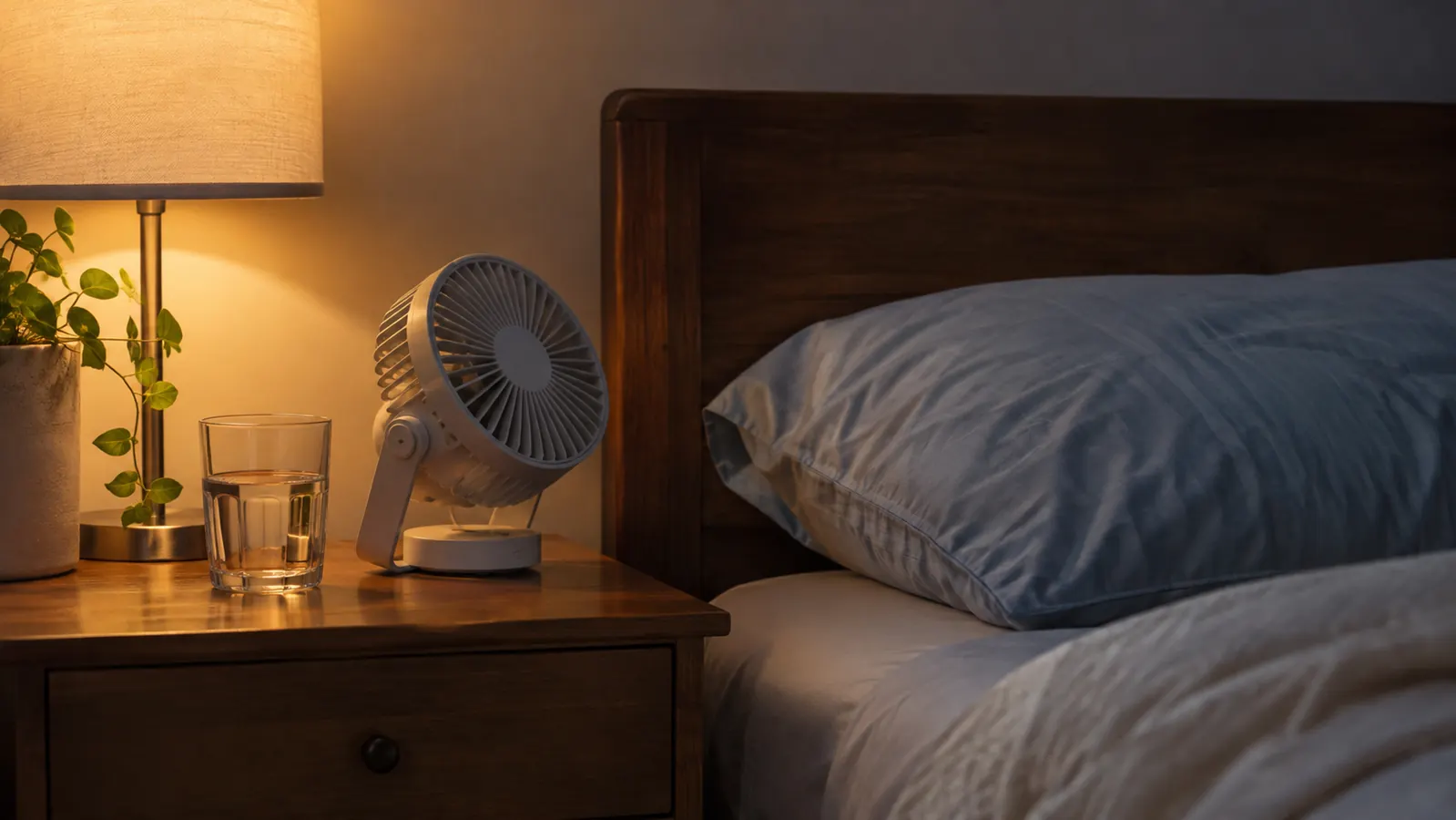
A second pillow, so you can trade one for the other without getting out of bed. A small fan on the nightstand aimed slightly away from your face rather than straight at it. And a short, lukewarm shower before bed rather than a hot one. I know a hot shower feels good. It also raises your skin temperature right when you are trying to bring it down, and I can feel the difference in how quickly I settle.
The order of the layers matters more than the brand of any one of them. Sheet, then cooling blanket, then nothing else on your side. The minute you stack a quilt on top of the cooling layer, you have built a warm blanket with extra steps.
One medical note, and then I will get off my soapbox. I am a retired school librarian, not a doctor. If your night sweats are new, if they soak through your clothes and the sheets, or if they come with other symptoms you cannot explain, call your doctor and describe them plainly. Cooling a bed is a comfort measure. It is not a diagnosis, and it is not a substitute for one.
Start with the layer that does the most work
The Bedsure cooling blanket in queen, 90 by 90 inches, 3.9 pounds, machine washable in a laundry bag. It goes on your half of the bed, over the sheet, and stays tucked.
Amazon Check Today's Price on Amazon →