

At 2:40 in the morning last July, I was standing in front of the open refrigerator with a dish towel on the back of my neck. Not looking for a snack. Just standing there, letting the cold air hit me, wondering how a person goes from dead asleep to drenched in four minutes flat.
I am 54 now. Perimenopause started around 49, and the night sweats showed up when I was 51. They still wake me a few nights a week. My husband Rick sleeps cold. He wants an extra blanket in July. I want the window open and a cold pack against my sternum. We have been negotiating over one queen bed for three years and neither of us is winning.
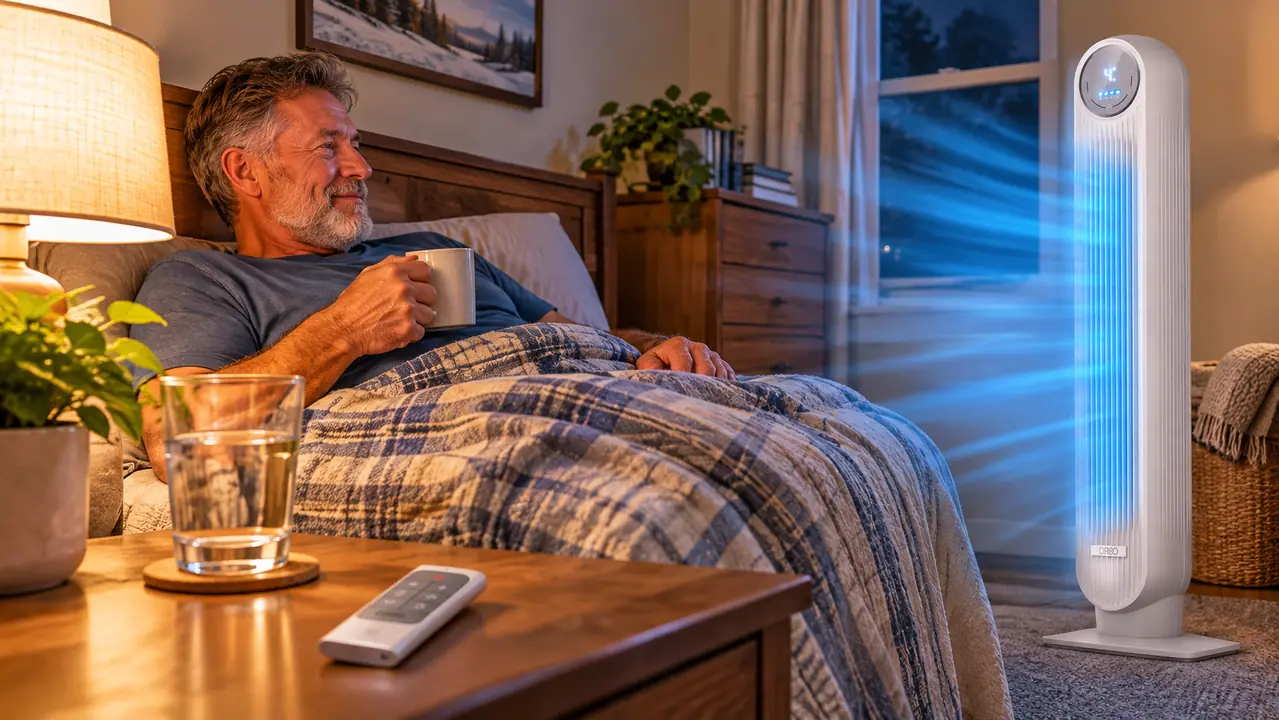
I tried the obvious things first. The ceiling fan on high, which mostly moved warm air around and dried my eyes out. The window air conditioner, which cooled the whole room and turned Rick into a popsicle. Cooling pillows that go warm in twenty minutes. Ice packs that end up in a puddle by dawn. All of it helped for about an hour. The DREO tower fan on my side of the bed was a different idea, because it is smaller, quieter, and aimed at me instead of at the whole room.
It came into the house last summer and I put it on the floor beside the bed, angled at the mattress rather than at the ceiling, because a ceiling fan moves the whole room's air and this one moves air at me. The first night I ran it on Sleep mode and waited to see whether Rick would complain about being cold. He did not. That alone made it worth the floor space.
What sold me was the noise, or the lack of it. The DREO lists 31 decibels, and from my pillow it sits underneath the sound of the window unit and the crickets. I am a fussy sleeper who has returned two fans to the store because they clicked. This one does not click.
So here is the honest version, one full summer in, with the caveat up front: no fan stops a hot flash. What a fan can do is shorten the stretch where you are awake and boiling. That is worth more than it sounds.
No fan stops a hot flash. What it does is cut the awake-and-boiling part from forty minutes to about ten. On a bad night, that is the difference between a real night's sleep and none.
Air Aimed at My Side of the Bed, Not at the Whole Room
If you and your husband are quietly at war over one thermostat, this is the compromise that actually held in our house. Remote on the nightstand, quiet enough to leave running, and it moves enough air to matter at 3 a.m.
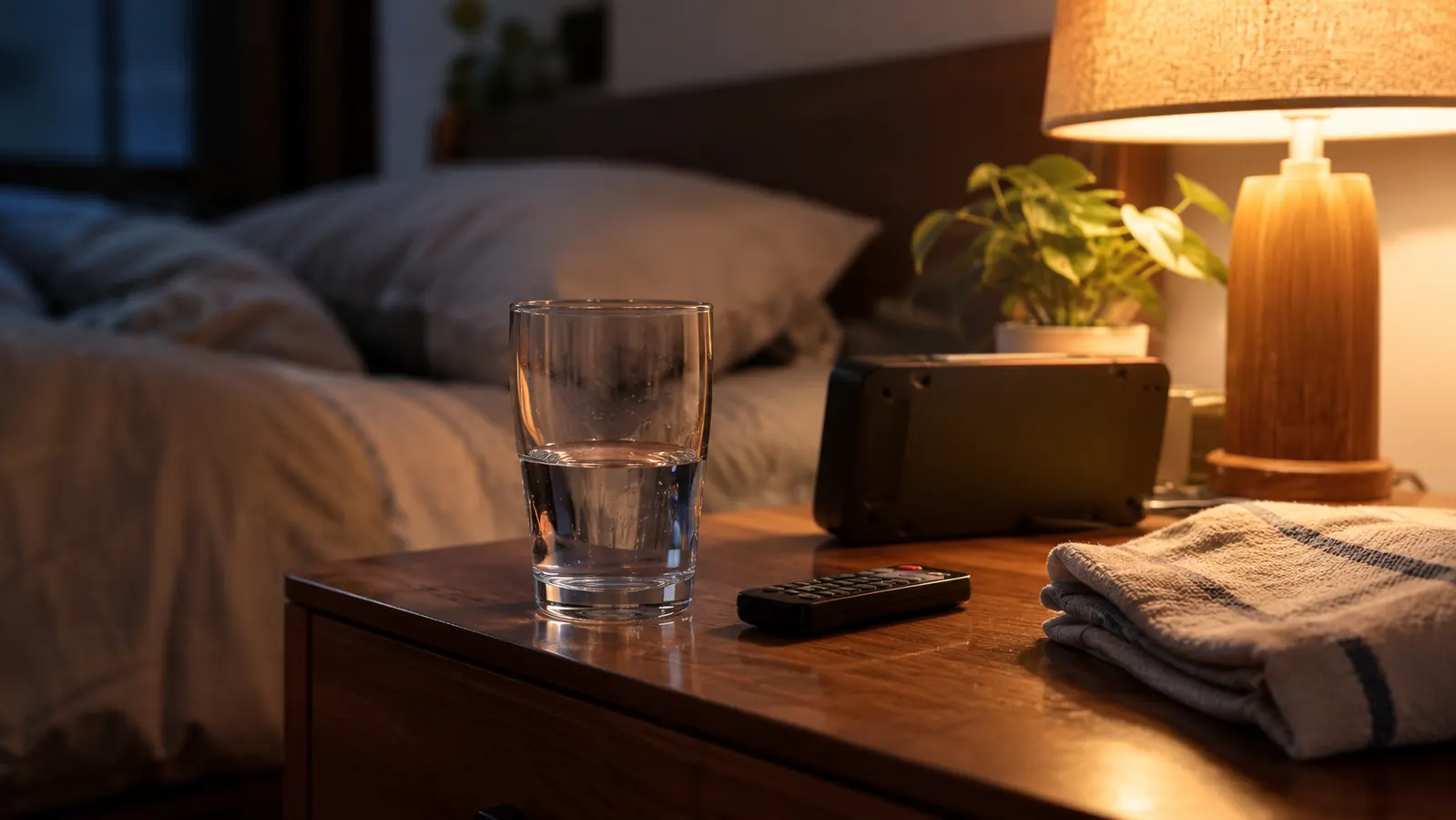
Amazon Check Today's Price on Amazon →My routine at 3 a.m. is this. I wake up hot, I do not get out of bed, and I do not touch the air conditioner, because the air conditioner cools the entire room and Rick wakes up cold and cross. Instead I feel for the remote on the nightstand, which is where it lives now, and I step the speed up from two to six or seven. The fan goes up one setting at a time, so I can land on the right amount of air instead of jumping straight to gale and freezing myself out.
During a flash I turn the oscillation on. Ninety degrees of sweep means the air crosses the bed instead of hammering one spot, which feels less like a wind tunnel and more like a breeze moving through the room. When the worst of it passes I narrow it back to a fixed stream and switch from Normal to Natural and let it vary. A steady blast is hard to lie still in. Something that shifts is not.
The other surprise was how little I hear it. Rick is a light sleeper, and he has asked me to turn down every fan we have owned since 1998. He has not asked me once about this one. It weighs 3.8 kg, so I can lift it with one hand and carry it downstairs to the kitchen on a bad afternoon without making a production of it.
I want to be straight with you about what this does not do. It does not cool the air and it does not drop the temperature of the room. It moves air across your skin, which is the thing that makes a hot flash bearable, and it does it in the time it takes to find the remote. I still wake up. Some nights I still get up and stand in the kitchen. But the stretch of lying there boiling has gone from forty minutes to maybe ten, and ten minutes is something I can fall back asleep from.
There is one more detail I did not expect to care about, and that is the timer. I set it when I get into bed so the fan runs while I fall asleep and then stops, which means Rick is not lying in moving air all night. If I wake up hot, I turn it back on with the remote without opening my eyes more than a crack. That sounds like a small thing. At 3 a.m. it is not a small thing.
What I'd Tell You If We Were Sitting at My Kitchen Table
If we were sitting at my kitchen table with coffee, here is what I would say. First, this is not a medical fix and I am not qualified to give you one. Night sweats can be thyroid, they can be a medication, they can be a dozen different things, and your doctor should hear about them. Make the appointment. Second, the practical stuff still matters, and a fan aimed at your side of the bed instead of the whole room is the most useful version of that I have found. Third, tell your husband what you are doing and why. Rick stopped being wounded about the air conditioning once he understood the fan points at me. Fourth, give it a week before you decide. The first night I thought it was fine. By the fifth night I noticed I had stopped dreading bedtime. That DREO is still on my side of the bed, still plugged in, and I would buy it again.
The One I'd Buy Again If This One Died
I have bought a lot of things that were supposed to fix my sleep. This is one of about three that stayed plugged in past October.
Amazon See the DREO Tower Fan on Amazon →